
By RenoWorks Hampshire · Published 28/10/2026
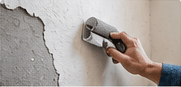
Identify what would become dust
Before picking up an abrasive, establish the material and coating history. Old paint can conceal lead, while textured coatings and some boards may contain asbestos. Stop and obtain competent advice when these are possible; a basic disposable mask is not permission to continue. This guide covers only ordinary decorative preparation after the background has been assessed as safe, not hazardous coating removal or structural material cutting.
Define the purpose of abrasion
You may be levelling a small filler ridge, removing a raised nib or creating a key for a compatible new coating. Those are different tasks from stripping a whole room. Clean grease away first so it is not spread across the surface. Read the coating system's preparation guidance and choose the least aggressive method that achieves the stated result. Sound paint does not automatically need complete removal.
Use the right abrasive and support
Select an abrasive intended for the material and the finish you need. A sanding block helps keep broad flat areas even; excessive fingertip pressure can create hollows. Mouldings need a method that preserves their profile. Work cautiously on thin veneers and plasterboard paper. If you need heavy pressure or the abrasive immediately clogs, reassess whether the coating is dry enough or the method is appropriate.
Plan dust control before beginning
Keep preparation separate from clean rooms and remove unnecessary furnishings. Where a machine is appropriate for a known safe task, use its recommended extraction system and follow equipment and protective equipment instructions. Do not sweep fine dust through the house or use an unsuitable domestic vacuum for construction dust. Keep others away from the area and avoid tracking residue into kitchens or children's rooms.
Inspect, clean and prime
Stop regularly and inspect under side light; unnecessary extra abrasion can create more defects than it removes. Use a compatible cleaning method and allow the surface to dry fully. Check that bare patches, repairs and intact coating receive their specified primer treatment. Before painting, clean the immediate work area as well as the surface so settled dust does not fall back into the wet finish. Store abrasives separately from clean brushes.
Related questions
Is wet sanding always safe for old paint?
No technique removes the need to identify and manage a hazardous coating. Obtain advice on the material and suitable controls before disturbance; do not improvise lead or asbestos removal.
What grit should I use for everything?
There is no single correct grit. Follow the filler or coating guidance and match the abrasive to the task. Test gently on a discreet safe area and avoid scratches that the finish will emphasise.
Further reading
Prefer help with the project?
Tell us about the work and your property in Hampshire or West Sussex.
ASK FOR A QUOTE